Summary Introduction
RESULTS: for Havis – 22.4% – 9,311 votes. For opponent – 77.5% – 32,262 votes. Money raised: $26,000 Mobilized 500 Volunteers, donors and supporters. – From this year-long campaign experience, I learned how hard it is to overcome a well-funded, tightly organized and entrenched “machine” style opposition. The strength of this machine came out most significantly in its distribution of a “sample ballot” to voters, which had all their candidates and issues marked. So, many voters simply copied the sample ballot selections on to their own ballots in a rather mindless, automatic manner. The sample ballot therefore discouraged voters from making a more thoughtful evaluation of each separate candidate and issue.
Breaking the hold of this corrupt style of “machine” politics requires insurgent candidates to work closely together to create and distribute their own “sample ballot”. While this involves a high level of organization and collaboration among Republican candidates, it can and must be done for the good of all. In addition, if possible, make sure that each office open for voting has a Republican candidate listed.
My Campaign
Visiting churches
Each week, I visited a different church in LD21. Although I met many good people in this way, quite a large number were not actually voters in LD21, since they lived outside the district. Lesson: A good and useful strategy; go back and visit each church that gave a positive response; to build relationship for future.
Door-to-door canvassing
Most Saturdays, I used the MDGOP “advantage” database for door-to-door canvassing. Often there was no answer at the door, so I just dropped “Havis” campaign literature with a personal note. For those who answered, I asked for their name and contact information to place on a sign-up sheet for later regular follow up. Occasionally, I received a financial donation; and commitment for placement of a sign. Lesson: Targeted voters were often not residing close to each other; and when approached, no one was home, or voters were not available for discussion. So few people were reached in the time available. Better to identify good neighborhoods and precincts, and knock on every door, focusing on main roads with heavy traffic. For each person, ask for contact data, donation and to place a sign (in future, just a few weeks before primary and general election).
Sign Waves
This was done regularly at major intersections at rush hour on a weekday, 5-7 PM. Before Maryland home football games. Great visibility for name recognition. Very positive interaction with motorists; and a great way for developing social support among volunteers. Lesson: Use regularly, especially close to election time. Not enough impact by itself, however, without other forms of interaction and outreach.
Candidate forums-debates
Only one was held; sponsored by several civic associations in Beltsville. Very useful. Lesson: Too few to make much of a difference. In Prince George’s County, the civic associations and other news media have, in general, a strong bias for “Democratic” machine candidates. Better to use my own social media outreach; take the opportunities where possible. But don’t count on them.
Social Media – Facebook
I used social media, especially facebook, a lot. Many people found my campaign this way, and name recognition was achieved. Lesson: For any FB advertising, make sure reference is made to connect posts with “campaign” and “politics”, rather than just as social events. Be explicit. Instead of focusing just on targeted “conservative” audience, reach out to wider audience, even at the risk of negative backlash. Use posts to stimulate interactions; make questions, raise issues, and promote discussion, such as through polling and surveys.
Community meetings and outreach
I participated in parades and community days, often with other Republican candidates. Lesson: useful and necessary for name recognition. As much as possible, use a sign-up sheet to get name and contact data for later follow up.
Absentee ballot outreach
Sent 4,000 invitations to apply for absentee ballot to infrequent Republican-leaning voters in district. Of some 3,000 letters sent in PG County, only about 400 actual AB’s were returned from Republicans. Democrat voters with AB was about 1,000, with only a small number voting for me. Lesson: not a good return on investment. Better to get names of those applying for AB from the Board of Elections, and send them a personal note to vote for “Havis” [benefit here is that voters using AB may take more time and vote more thoughtfully than those who go to the polls]
Mailer – Team 21
Mailed 8,000 “team 21” pieces to targeted high-value Republican leaning voters in LD21. On this mailer, all Republican candidates in LD21 were listed, with some pictures of those who contributed financial support for its printing and mailing. $2,000 came from PGGOP. Total cost about $6,500. Extra copies delivered on lit drops to specific precincts. Lesson: well received; successful; much appreciated by voters. Mail out more widely; where insufficient funds, use lit drops more widely; make sure this publication is printed and available far in advance of Election Day to assure wide distribution. Make sure ALL ballot questions are listed and checked on the sample ballot as well.
Fundraising Events
Two were held. Both were in the format of a simple “meet and greet” reception with food. Mailing and phone calls were made to encourage attendance. Sponsor levels were set for major donor support. Lesson: necessary to raise funds, although actual attendance is not great in numbers. Many donate without attending. Keep these events simple to avoid undue investment of time and effort for facilities and marketing.
December 11, 2018
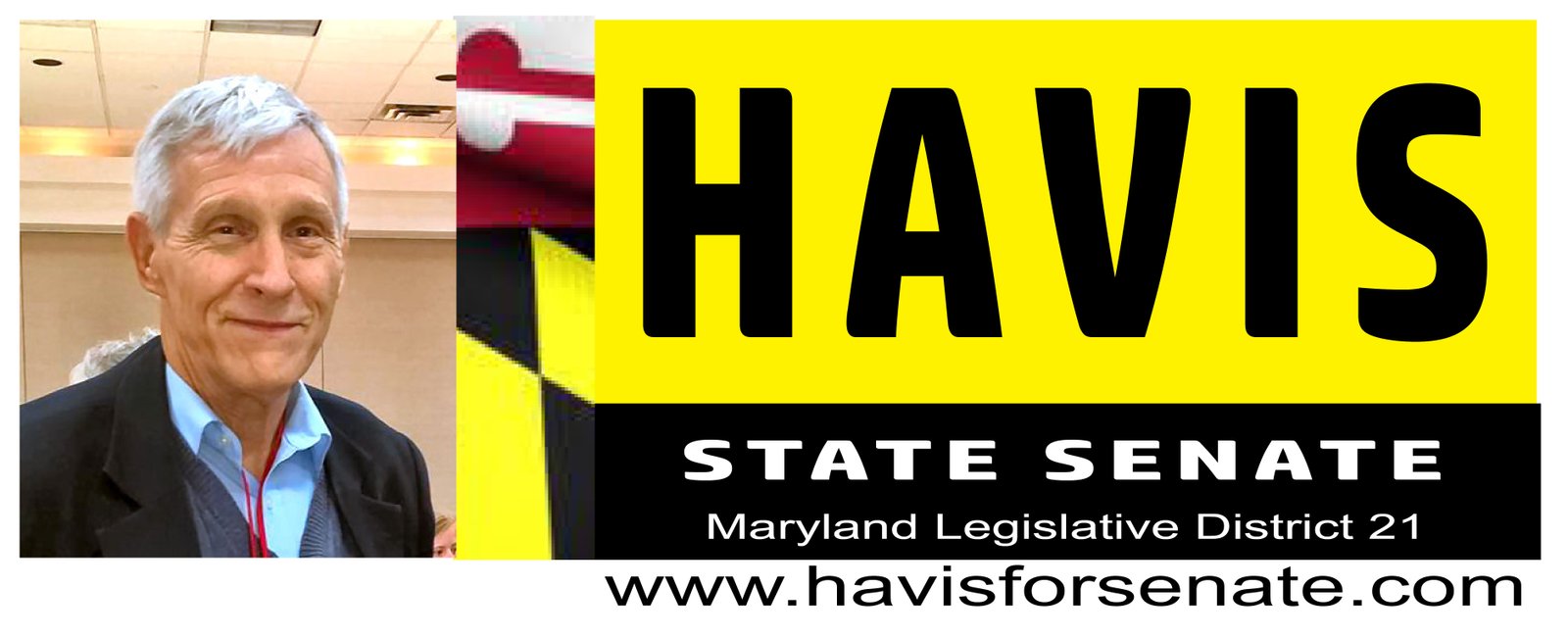
Lee Havis, Candidate
Maryland State Senate
lee@havisforsenate.com
http://havisforsenate.com
Lee,
This is an excellent analysis and should be part of a candidate training package. Would you mind if I lobbied the Howard County Central Committee to use it? We would ensure that you were attributed as the author.
Regards,
Bill
Bill, of course! Whatever you find useful, use it. Invite me as a speaker for a rap session. Would love to help Howard County advance the Republican cause. Sorry you missed the “thank you” event on January 5. Very enjoyable and worthwhile.
Lee,
I noticed that Sen Rosapepe and other primary winners took advantage of the fact that signs put up for the Primary could be left up until the general election. As a result, his signs were up for months. I think candidates who concentrate on party voters for the primary can reap benefit of this, and use the time between the primary and the general election to pursue voters of the other party (presuming those who vote for you in the primary will also vote for you in the general
Steven – Signs can be a negative if they stay up too long – and in Odenton, where you live, I saw some angry complaints about signs left up after the primary. For me, signs are mostly defensive in nature – you have to put them up to counter the effect of what the other candidate does. For all the good signage of the “Havis” campaign, we still couldn’t overcome whatever incentive there was among the Odenton voters to vote Democrat instead of Republican on my campaign and for others down ballot as well. Some good Republican candidates got clobbered unexpectedly in Anne Arundel county. Some lessons need to be learned from this experience.